

logo
Henan Hongtai HVAC Equipment Co., Ltd.
About Us
Your Professional & Reliable Partner.
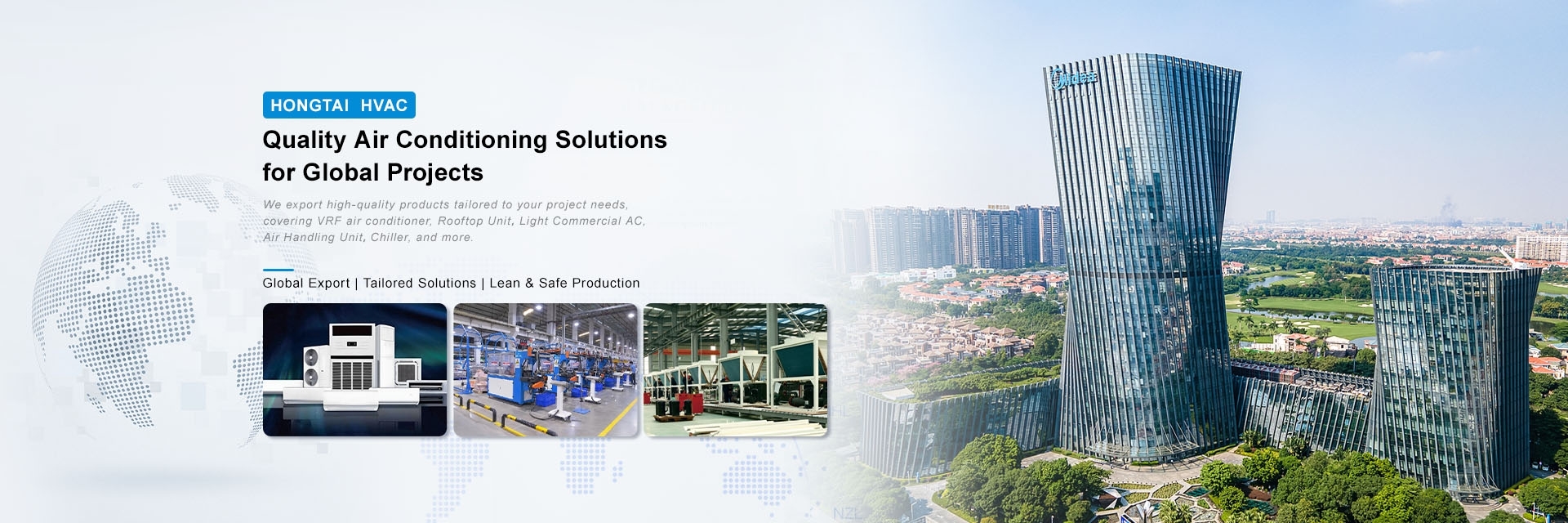
Henan Hongtai HVAC Equipment Co., Ltd. is a technology-based service enterprise integrating the sales of air-conditioning system and related accessories, exporting the products with good quality and the most suitable ones for customers' project. Our main products include VRF system, Chiller & Terminals, Light commercial unit and etc. We're specialized in providing comprehensive solutions for air-conditioning systems such as office buildings, shopping malls, hotels, stations, hospitals, and ...
Learn More

0

Year Established

0

Million+
Employees

0

Million+
Annual Sales
China Henan Hongtai HVAC Equipment Co., Ltd. HIGH QUALITY
Trust Seal, Credit Check, RoSH and Supplier Capability Assessment. company has strictly quality control system and professional test lab.
China Henan Hongtai HVAC Equipment Co., Ltd. DEVELOPMENT
Internal professional design team and advanced machinery workshop. We can cooperate to develop the products you need.
China Henan Hongtai HVAC Equipment Co., Ltd. MANUFACTURING
Advanced automatic machines, strictly process control system. We can manufacture all the Electrical terminals beyond your demand.
China Henan Hongtai HVAC Equipment Co., Ltd. 100% SERVICE
Bulk and customized small packaging, FOB, CIF, DDU and DDP. Let us help you find the best solution for all your concerns.

quality DC Inverter VRF & DC Inverter Mini VRF manufacturer

Find Products That Better Meet Your Requirements.
Cases & News
The Latest Hot Spots
Hongtai HVAC: Sheet Metal Duct Fabrication — Craftsmanship Behind Every Project
Hongtai HVAC | Sheet Metal Duct Fabrication Workshop — Craftsmanship Showcase     Project Overview   Hongtai HVAC operates a dedicated duct fabrication workshop equipped for full-process production — from raw steel sheet inspection to finished duct delivery. Every duct section is manufactured to project specifications, ensuring dimensional accuracy, airtight performance, and long-term structural integrity.   Our fabrication capability covers the complete range of commercial ductwork: rectangular ducts, spiral ducts, fittings (elbows, reducers, tees, plenums), and custom configurations for complex building layouts. Whether the project calls for standard galvanized steel or specialized materials for corrosive environments, we fabricate in-house to maintain consistent quality from start to finish.   Fabrication Process   Stage Operation Quality Control Point 1. Material Selection Galvanized steel inspected for thickness, coating weight, and surface quality Reject any sheet below specification — no exceptions 2. Precision Cutting CNC and shear cutting to exact dimensions per duct drawings Verify length, width, and squareness before proceeding 3. Folding & Forming Press brake folding with consistent bend angles and radii Check angle accuracy and surface integrity at each bend 4. Seam Locking Pittsburgh lock, snap lock, or standing seam per joint type Air tightness verification — every joint, every time 5. Welding & Sealing Spot welding and continuous welding at critical connections Weld penetration and leak testing before acceptance 6. Final Inspection Dimensional check, surface inspection, cleanliness verification Duct capped and protected before leaving workshop   Why It Matters   In commercial HVAC projects, ductwork is the infrastructure that connects equipment performance to occupant comfort. The most advanced air conditioning system in the world cannot overcome the losses caused by poorly fabricated ductwork:   • Air leakage: Industry studies show that average commercial duct systems lose 15-30% of conditioned air through leaky seams and joints. Hongtai's precision fabrication and airtight seam locking minimize leakage, ensuring the air you pay to condition actually reaches the occupied spaces. • Energy waste: Every percentage point of air leakage means the HVAC equipment must work harder and consume more energy to achieve the same comfort level. Over the 15-20 year life of a commercial building, this energy waste compounds into significant cost. • Noise and comfort: Poorly formed ducts create turbulence and whistling at joints, degrading acoustic comfort in offices, hotels, and hospitals. Precision fabrication eliminates these issues at the source. • Installation efficiency: Consistent dimensions and square edges mean faster on-site assembly, fewer field modifications, and lower installation labor costs. When ducts fit right the first time, the entire project timeline benefits.   Key Highlights   • Full-process in-house fabrication: Cutting → folding → seam locking → welding → inspection. No outsourcing, no quality gaps. • Premium material selection: Galvanized steel sourced to specified thickness and coating weight. Every batch inspected before production begins. • Quality at every stage, not just final inspection: Each fabrication step has its own checkpoint. Problems are caught and corrected immediately — not discovered after installation. • Custom fabrication for project-specific needs: Rectangular, spiral, and specialty fittings manufactured to your project's exact drawings and specifications. • Protected delivery: Finished ducts are capped and packaged to prevent contamination and damage during transport and storage on site.   The Hongtai Standard   We don't just supply equipment — we engineer the entire air distribution system. From the duct behind your walls to the unit on your rooftop, every component is held to the same standard of precision and reliability.   When the ductwork you never see is built with this level of care, you can trust the HVAC system you rely on every day is built to the same standard — or higher.   That's not a promise. That's our process.
Project Case: Henan Yinji Commercial Plaza | Midea V8 VRF System Installation
Project Overview    Henan Yinji Commercial Plaza is a landmark of Zhengzhou business district. This commercial giant with a total construction area of over 100000 square meters requires a comprehensive HVAC upgrade plan that can meet its strict operational requirements. The Midea V8 multi split system has become the ultimate choice for this flagship project.   Project Highlights Why Midea V8 Series?  Feature Benefit Ultra-High Efficiency IPLV up to 10.5 Significant energy cost savings for 12+ hour daily operations 1,000m Maximum Piping Length Perfect for super large commercial building layouts Modular Design Architecture Flexible expansion and simplified maintenance Smart Zone Control Individual temperature adjustment for different areas   Construction Site Overview   Key Moments Captured 1. Delivery & Unloading - Large truck fleet arrives at project site 2. Quality Inspection - Every indoor unit undergoes thorough inspection 3. Floor Transportation - Professional equipment handling to each floor 4. Precision Positioning - Units carefully placed at designated locations 5. Protection Measures - Multi-layer packaging ensures no damage   Professional Installation Team   Our construction team consists entirely of Midea factory-certified technicians. Every team member has completed comprehensive training covering installation standards, safety protocols, and quality control procedures. From pipe welding to control line installation, each process follows strict Midea commercial HVAC construction standards. An on-site project manager oversees the entire installation process, ensuring both progress timelines and quality benchmarks are met. This integrated "Product + Service" solution represents the core competitive advantage of Midea commercial air conditioning in large-scale projects.   Project Scope & Specifications   Specification Details Total Indoor Units 200+ units Coverage Area Public corridors, retail spaces, offices, and facilities Operating Hours 12+ hours daily System Features Zone-by-zone temperature control, smart management Expected Completion Q3 2026   Customer Benefits  For Yinji Plaza Operations • Year-Round Comfort - Constant temperature environment for 100,000+ daily visitors • Energy Savings - V8 ultra-efficiency reduces operational costs significantly • Flexible Control - Different zones can adjust temperature based on usage needs • Reliable Performance - Proven technology designed for continuous operation   About Midea Commercial HVAC   Midea is a global leader in commercial air conditioning solutions, with projects spanning across 200+ countries and regions. Our V8 VRF series represents the latest advancement in variable refrigerant flow technology, delivering industry-leading efficiency, reliability, and flexibility for commercial applications of all sizes. Backed by a global service network and 24/7 technical support, Midea ensures that every commercial HVAC installation delivers lasting performance and value for our customers. Contact Us Interested in Midea V8 Series for your project? Contact our commercial HVAC specialists today for a customized solution. Email: xiaohongmao@unit-hvac.com Phone: +86 18703827920 Website: http://www.unit-hvac.com/
Unstable VRF Outdoor Unit Operation & High Failure Rates in Hotels: Midea V8 Pro Delivers Reliable Continuous Operation
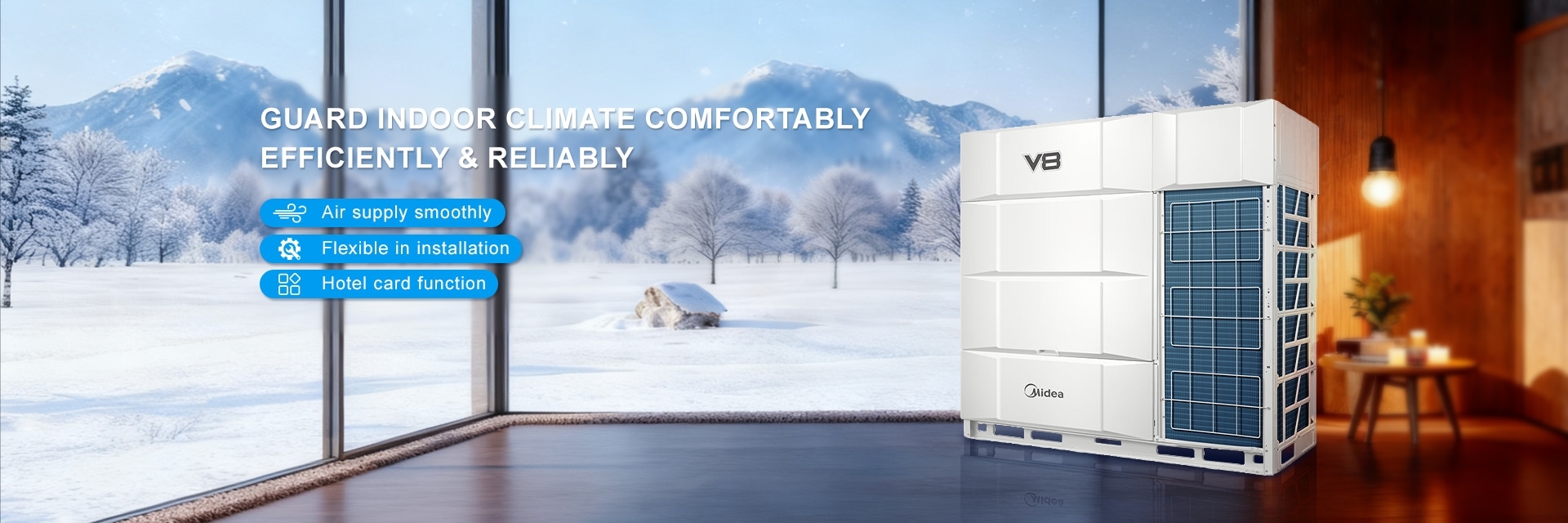
Unstable VRF Outdoor Unit Operation & High Failure Rates in Hotels: Midea V8 Pro Delivers Reliable Continuous Operation     Core HVAC Pain Points in Hotels: 24/7 Operation & Equipment Stability   Hotels are 24-hour commercial facilities where unstable VRF operation, unexpected shutdowns, and high failure rates directly downgrade guest experience, disrupt front desk, F&B, and public area services, and cause complaints and operational losses.   In Central Asia and African regions, harsh conditions such as high temperature, high humidity, salt spray, and voltage instability often worsen compressor abnormalities, electrical failures, pipeline corrosion, and communication interruptions, leading to more frequent failures and maintenance of conventional VRF outdoor units.   Reliable Design for Hotels: Reduce Failures and Shutdown Risks   Midea V8 Pro (V8 Series) outdoor units improve continuous operation capability through hardware structure, control logic, and protection rating.   The unit is equipped with an IP55 fully enclosed Shield Box to block dust, water, corrosion, and insects, supporting stable performance in harsh environments.   The system adopts 19-channel Super Sense sensors with virtual sensor backup. When a physical sensor malfunctions, the system switches automatically to avoid unexpected downtime.   It also supports quadruple backup operation for compressors, fans, and units, so single-component failure will not stop cooling or heating, greatly reducing the risk of sudden HVAC interruption in hotels.   Stable Performance & Long-Life Design Suitable for Hotels   V8 Pro outdoor units use full DC inverter + EVI technology to maintain stable capacity in a wide operating range of -30℃ to 55℃, supporting year-round use in hotels across different climate zones.   5-stage precise oil control continuously monitors compressor oil level to ensure stable lubrication, reduce wear and failures.   The outdoor unit holds UL corrosion certification and can withstand 27 years of simulated severe salt spray corrosion, ideal for coastal hotels and special buildings.   With duty cycling control, the system equalizes running hours of compressors and outdoor units to extend service life.   Conclusion: Stability Is Critical for Hotel VRF Selection   For 24/7 hotel projects, VRF outdoor unit stability directly affects operational quality. With high protection, redundant backup, intelligent monitoring, and long-life design, Midea V8 Pro alleviates pain points including unstable operation and high failure rates, helping hotels lower maintenance costs and ensure consistent comfort and service continuity.  

2026

06/02

Optimizing Roof Footprint for Large Office Complexes: Space-Saving VRF Modules Redefine Commercial Cooling Layouts
Optimizing Roof Footprint for Large Office Complexes in South Africa: Space-Saving VRF Modules Redefine Commercial Cooling Layouts     Introduction: The Urban HVAC Challenge in South African Cities   In high-density commercial centers across South Africa—from the bustling financial districts of Johannesburg to the space-constrained coastal developments in Cape Town—architects and mechanical engineers face a shared dilemma. Modern high-rise commercial buildings demand high-capacity HVAC systems to handle intensive cooling loads. However, premium real estate values and strict architectural aesthetics often compress the available plant area on roofs.     To overcome severe roof footprint limitations while ensuring uninterrupted climate control, modern commercial projects require a shift from bulky traditional chillers to modular, high-static-pressure Variable Refrigerant Flow (VRF) systems.     Technical Selection Guide: Solving Footprint Constraints   High External Static Pressure (ESP) and Flexible Plant Placement Traditional outdoor AC units with low static pressure must be scattered across extensive roof areas to prevent thermal short-circuiting. For high-rise commercial structures, a critical parameter to look for during equipment selection is the External Static Pressure (ESP) of up to 120Pa.   An outdoor unit equipped with a 120Pa high-performance DC fan motor allows the equipment to be installed behind architectural louvers, clustered inside dedicated plant rooms, or stacked vertically on intermediate mechanical floors. This exceptional air-shaping capability prevents hot air recirculation and enables centralized layouts, drastically minimizing the horizontal roof footprint.     High Capacity-to-Footprint Ratio with Modular Flexibility When designing the HVAC system for a large office complex, selecting a system that offers high single-module capacities is paramount. Choosing a system that delivers a single-unit capacity of up to 36HP allows engineers to replace multiple smaller, fragmented outdoor units with one consolidated module.   Furthermore, when scaling up to a combined system capacity of 108HP, these advanced modules can be piped together in an ultra-compact linear array. This high-density footprint optimization frees up valuable roof space for solar photovoltaic arrays, rooftop amenities, or green architectural spaces without compromising the building's total cooling capacity.     Ensuring Long-Term Stability in Coastal South Africa   Mitigating Severe Salt Mist Corrosion For high-density commercial centers located along South Africa's expansive coastline, space optimization cannot come at the expense of structural durability. Outdoor HVAC plant on roofs is relentlessly exposed to high-humidity salt mist and corrosive coastal winds.   Engineers must prioritize equipment backed by verified material performance standards, such as a UL anti-corrosion certificate demonstrating the ability to withstand 27 years of simulated severe corrosion. Investing in units with a fully sealed electronics enclosure—such as an IP55 ShieldBox—protects core inverter components from both moisture ingress and salt degradation, ensuring continuous grid stability.     Active Redundancy and Intelligent Maintenance In commercial office sectors, a localized sensor failure should never trigger a complete system shutdown. Modern technical specifications should include a comprehensive grid of 19 high-precision refrigerant sensors combined with Virtual Sensor Backup technology. If a physical sensor encounters an anomaly, the software instantly calculates a virtual parameter to take its place, maintaining a stable indoor climate while building management schedules routine maintenance.

2026

06/02

No More HVAC Shutdowns! V8 Series Digital Twin Backups Counter South Africa Sensor Failures
Sensor Failure Leading to System Shutdown in South African Commercial Projects: How the V8 Series Enables Non-Stop Operation   In large commercial buildings, mixed-use complexes and premium office projects across South Africa, stable VRF operation directly impacts tenant satisfaction and operational costs. However, one frequently underestimated risk is a system shutdown caused by a single sensor failure.   For facility management teams, the failure of one temperature or pressure sensor often means a complete loss of air conditioning in a specific zone until a technician arrives to replace the component. This article reviews the redundancy logic of Midea's V8 Series VRF based on its product documentation.   The Industry Pain Point – Why a Single Point of Failure Affects the Entire System   In conventional VRF systems, multiple sensors inside the outdoor unit—monitoring compressor discharge temperature, heat exchanger coil temperature, refrigerant pressure, etc.—are hardwired into the safety logic. When any critical sensor produces an abnormal signal or completely fails, the control system actively stops the unit as a protective measure.   The direct consequences include: Loss of cooling or heating for commercial tenants during business hours Emergency site visits by maintenance teams Extended downtime due to parts procurement and replacement cycles   For shopping centres, office towers and medical facilities in South Africa, such unplanned shutdowns are unacceptable.   V8 Series Redundancy Architecture – 19 Physical Sensors and Virtual Backup   The Midea V8 Master/V8 series has up to 19 status sensors distributed throughout the entire refrigeration system, covering compressors, heat exchangers, throttling components, and more. However, the key technological difference lies in the digital dual virtual sensor backup mechanism.   How the Virtual Sensor Works When the system detects a failure of a physical sensor, the control algorithm does not immediately trigger a safety shutdown. Instead: 1. It calls real-time data from other related sensors 2. It references built-in data models of the compressor, heat exchanger and throttling components 3. It generates a virtual sensor in real time to replace the output signal of the failed physical sensor    "In the event of a sensor failure, other sensors can automatically simulate a virtual backup sensor, so that the VRF system can continue to operate without stopping."   From a building operations perspective, this means the failure of a single sensor no longer equals the shutdown of an entire refrigerant circuit.   Practical Value for South African Commercial Projects   Reduced Frequency of Unplanned Shutdowns High-rise office buildings in Johannesburg or Cape Town typically deploy multiple VRF outdoor units per floor or per zone. If one outdoor unit stops due to a sensor failure, tenants in that zone are directly affected. The V8 Series virtual backup function allows that outdoor unit to continue operating, enabling maintenance teams to schedule component replacement during normal working hours rather than emergency night call-outs.   Extended Effective Operating Time In Durban's coastal high-humidity environment or the Northern Cape's high-dust industrial areas, sensors are more prone to ageing or contamination. Virtual sensor backup does not prevent sensor failure but significantly reduces the probability of a system shutdown when a failure occurs.   Simplified Remote Diagnostics and Maintenance The V8 Series also includes a smart Bluetooth module and a cloud data gateway (Page 4). Service technicians can read outdoor unit operating parameters directly from a smartphone, identify which physical sensor has failed, and prepare replacement parts in advance—without opening the cabinet on site.   Selection Advice – Which Projects Should Prioritise Sensor Redundancy   For the following South African project types, specifying "non-stop operation during sensor failure" is recommended as a mandatory VRF selection criterion:   Healthcare facilities (clinics, private hospitals) – zone air conditioning cannot tolerate extended interruptions Retail complexes – tenant lease agreements often include HVAC availability clauses Data centre support zones – while main cooling is handled by precision AC, office areas still require high availability Government or 24-hour buildings – limited maintenance windows   Conclusion The Midea V8 Series, through the combination of 19 physical sensors and digital twin virtual sensor backup, solves the long-standing operational pain point of "single sensor failure causing full system shutdown" in traditional VRF systems. For South African commercial projects, this design translates directly into lower emergency repair costs and higher continuity of tenant comfort.

2026

06/01